
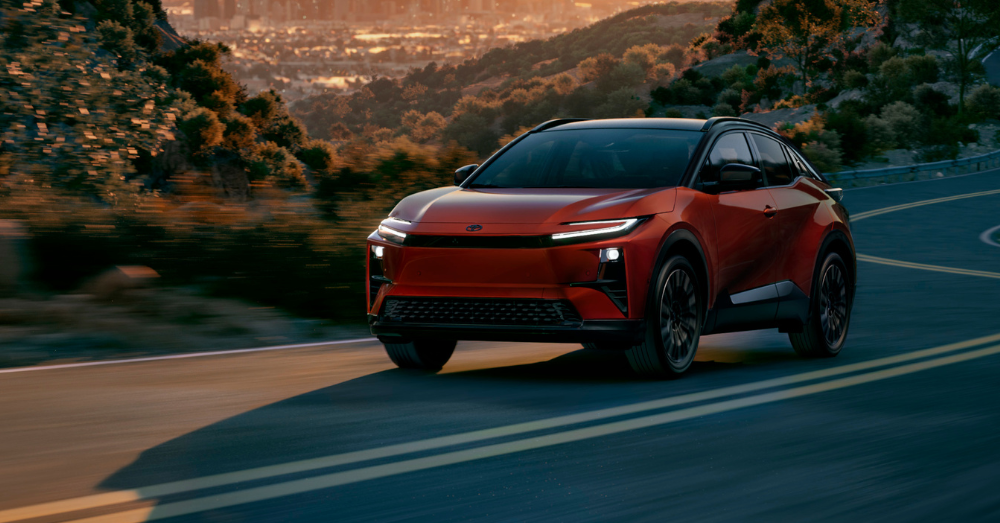
Toyota’s making a bold move with the 2026 C-HR, bringing back the funky nameplate as an all-electric crossover. With 338 horsepower and a claimed 0-60 time around five seconds, it’s gunning for buyers who want some serious zip in their EV. But this crowded segment already has tough competitors like the Kia Niro EV and Chevrolet Equinox EV, all vying for your attention and your charging dollars.
- The 2026 C-HR produces 338 horsepower with standard all-wheel drive and hits 60 mph in about 5 seconds.
- Toyota estimates 290 miles of range from its 74.7-kWh battery pack with DC fast charging capability.
- The C-HR enters a competitive field targeting urban drivers and first-time EV buyers, facing off against the Chevrolet Equinox EV, Hyundai Kona Electric, and Kia Niro EV.
The 2026 C-HR vs the Competition in Power and Performance
Let’s talk about what really gets people excited: acceleration. The 2026 C-HR BEV packs 338 horsepower from its dual-motor setup, paired with standard all-wheel drive and a manufacturer-estimated 0-60 mph time of around 5 seconds. That’s quick for this class.
The Kia Niro EV, by comparison, uses a single electric motor driving the front wheels that generates 201 horsepower and 188 pounds-feet of torque. A 64.8-kilowatt-hour battery pack provides an EPA-rated range of 253 miles. In testing, the Niro EV took 6.7 seconds to reach 60 mph, which is relaxed by EV standards.
The Chevrolet Equinox EV offers 220 horsepower with front-wheel drive but leaves a bit to be desired in acceleration. Go for all-wheel drive, and you get 300 hp and a 307-mile range. Still, neither rival can match the C-HR’s straight-line punch.
Range and Charging Speed Compared
Range anxiety remains a real concern for EV shoppers, so here’s how the numbers shake out. The C-HR’s 74.7-kilowatt-hour lithium-ion battery provides an estimated 290 miles of range. Toyota says the C-HR can charge from 10% to 80% in around 30 minutes under ideal conditions.
The Equinox EV takes the range crown here. FWD examples are good for 319 miles of range and AWD variants for 307 miles. That’s a real advantage for road trippers, though the Equinox EV’s 288V architecture limits it to a peak charging rate of just 150 kW, and a 5-80 percent charge took 48 minutes in testing.
The Hyundai Kona Electric trails both competitors here. It’s only available in base SE trim for 2026, limiting output to just 133 horsepower and EPA-estimated range to 200 miles. Hyundai has cut back the Kona Electric lineup for 2026 by eliminating most trims and discontinuing the longer-range battery.
Tech Features and Interior Quality
The C-HR comes in SE and XSE grades with solid standard interior features like a 14-inch touchscreen running Toyota Audio Multimedia, a fully digital gauge cluster, and dual wireless chargers in the center console. Toyota Safety Sense 3.0 includes adaptive cruise control, lane centering assistance, and Proactive Driving Assist.
The C-HR couples its zippy performance with a coupe-like design, a well-appointed interior, and 25.4 cubic feet of rear cargo space behind the rear seats. That’s smaller than some competitors but adequate for daily errands and weekend getaways.
The Niro EV Wind comes standard with a large 10.3-inch infotainment display with navigation, heated front seats, ambient interior lighting, dual-zone automatic climate control, and a wireless smartphone charging pad. Inside, you’ll find up to 63.7 cubic feet of cargo space with seats folded, which beats the C-HR handily.
Pricing and Value Breakdown
Toyota hasn’t announced official pricing for the 2026 C-HR yet. Based on the C-HR’s size, expect it to compete against the Kia Niro EV, Hyundai Kona Electric, and Volvo EX30.
Pricing for the 2026 Kia Niro EV starts at $41,195 including destination. The base Niro EV Wind starts at $41,195, and the uplevel Wave is priced from $46,195.
The Equinox EV starts at $34,995 with an EPA-estimated electric range of 319 miles with FWD. That aggressive pricing makes it a tough competitor to beat, especially if budget matters.
Finding the Right Fit for Your Driving Style
If you want raw acceleration and eye-catching style, the 2026 C-HR makes a strong case. The coupe-like design, standard all-wheel drive, and Toyota’s reputation for long-term reliability give it real appeal for drivers who want a stylish EV that doesn’t sacrifice everyday functionality.
Range-focused shoppers might lean toward the Equinox EV’s 319-mile capability. Budget buyers will appreciate the Equinox’s lower entry price. And if cargo space matters, the Niro EV’s 63.7 cubic feet wins that battle.
Toyota hasn’t sold a C-HR in the U.S. since the 2022 model year, so the new C-HR Electric is essentially a fresh take on a deferred idea. Whether it wins you over depends on your priorities, but Toyota clearly isn’t playing it safe with this one.
This post may contain affiliate links. Meaning a commission is given should you decide to make a purchase through these links, at no cost to you. All products shown are researched and tested to give an accurate review for you.