
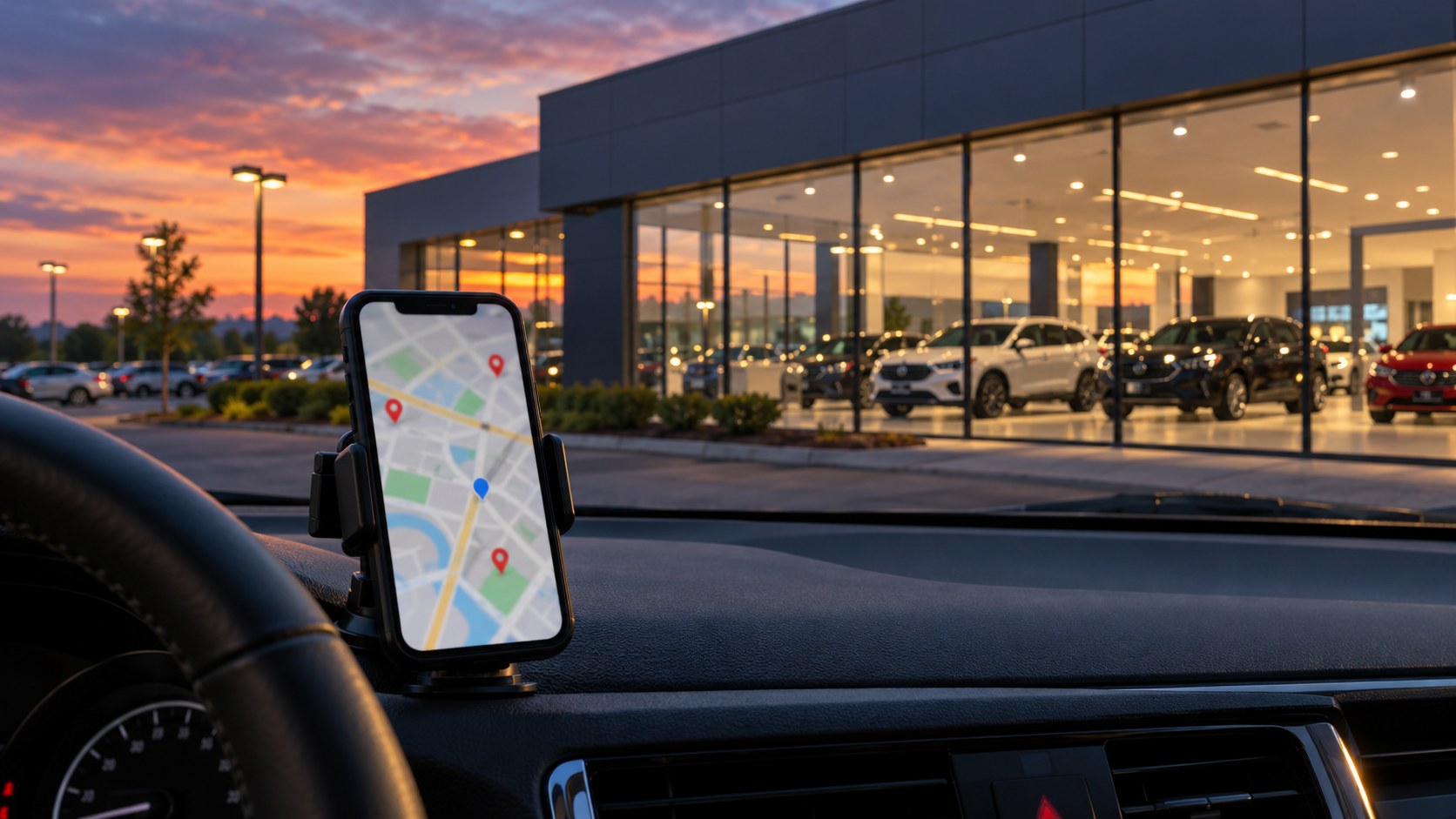
Car shoppers used to scroll through a list of map pins and pick one. Now they can just ask. Google’s Ask Maps answers questions with AI recommendations right inside Maps. That means a short list of businesses gets chosen before anyone taps through to a website. If your Toyota store isn’t on that list, plenty of shoppers may never know you were an option.
- AI tools like Ask Maps narrow local searches down to a few names before shoppers ever reach a dealer website.
- Cox Automotive found 63% of in-market car shoppers plan to use AI for their next purchase, but only 29% of dealerships have adjusted.
- A complete Google Business Profile, a steady flow of reviews, and open, helpful site content give AI more reasons to name your store.
Shoppers Are Asking and AI Is Answering
AI assistants now do a lot of the comparison work that shoppers used to do on their own. Instead of opening ten tabs, a buyer asks a question and gets a handful of names back. That shortlist is the new front door for local businesses, and car dealers are no exception.
The numbers show how fast this is moving. Cox Automotive‘s AI in Auto Retail Tracker for the first half of 2026 found that 63% of in-market car shoppers plan to use AI for their next vehicle purchase. Only 29% of dealerships have changed their strategy to account for AI search. That’s a big gap, and it’s an opening for the stores that move first.
Toyota has noticed too. The brand is reworking its own online marketing playbook to catch the attention of AI bots, since those tools are starting to replace traditional web searches. If the automaker is adapting, its dealers have good reason to follow.
Your Google Business Profile Does the Heavy Lifting
When someone types Toyota dealership near me into Google, the search engine already has a good idea where that person is standing. It leans on device location, search history, proximity, Google Business Profile data, and local relevance. Pages stuffed with the words “near me” won’t move the needle much. Google wants real businesses that make sense for where that shopper is.
That puts your Business Profile at the center of everything. It’s often the strongest ranking signal for local dealership searches, and one breakdown of Google Maps counted 72 ranking signals behind local results overall. Start with the basics.
- Fill in every field with complete, accurate business information.
- Pick categories that match what you actually do.
- Keep your hours up to date.
- List your service offerings so the profile reflects the whole store.
- Upload fresh photos on a regular basis.
Consistency matters outside the profile, too. Your store name, address, and phone number should match across your website, your profile, and any directories. Mixed signals can leave AI tools unsure which business they’re even looking at.
Reviews That Tell the Whole Story
Steady review generation is one of the most dependable things a dealer can work on. A burst of reviews followed by months of silence looks stale. Make a habit of asking happy customers for a review after they drive off in a new car or finish a service visit. That keeps your profile active.
Detail helps, too. A review that mentions a smooth trade-in or a quick oil change on a Tacoma tells shoppers far more than “great place.” Answer reviews, both good and bad, in a friendly and specific way. It shows people that a real team is paying attention.
Website Content That Answers Real Questions
Your site should answer the questions shoppers are typing into AI tools. Comparison pages, side-by-side feature breakdowns, ownership cost comparisons, and clear financing information all fit that bill. Write them in plain language so both people and machines can follow along.
Keep that content out in the open. Pages locked behind lead forms are hard for AI search tools to read, so save the forms for when a shopper is ready to take the next step.
Give Ask Maps Every Reason to Name Your Store
Getting recommended by Ask Maps starts with being easy to understand. Clean up your Business Profile this week. Build a simple routine for collecting and answering reviews. Then fill your website with honest, useful pages that answer what local Toyota shoppers want to know. None of this is flashy, but it adds up. When a buyer asks Maps where to go, you want your store to be the obvious answer.
This post may contain affiliate links. Meaning a commission is given should you decide to make a purchase through these links, at no cost to you. All products shown are researched and tested to give an accurate review for you.