
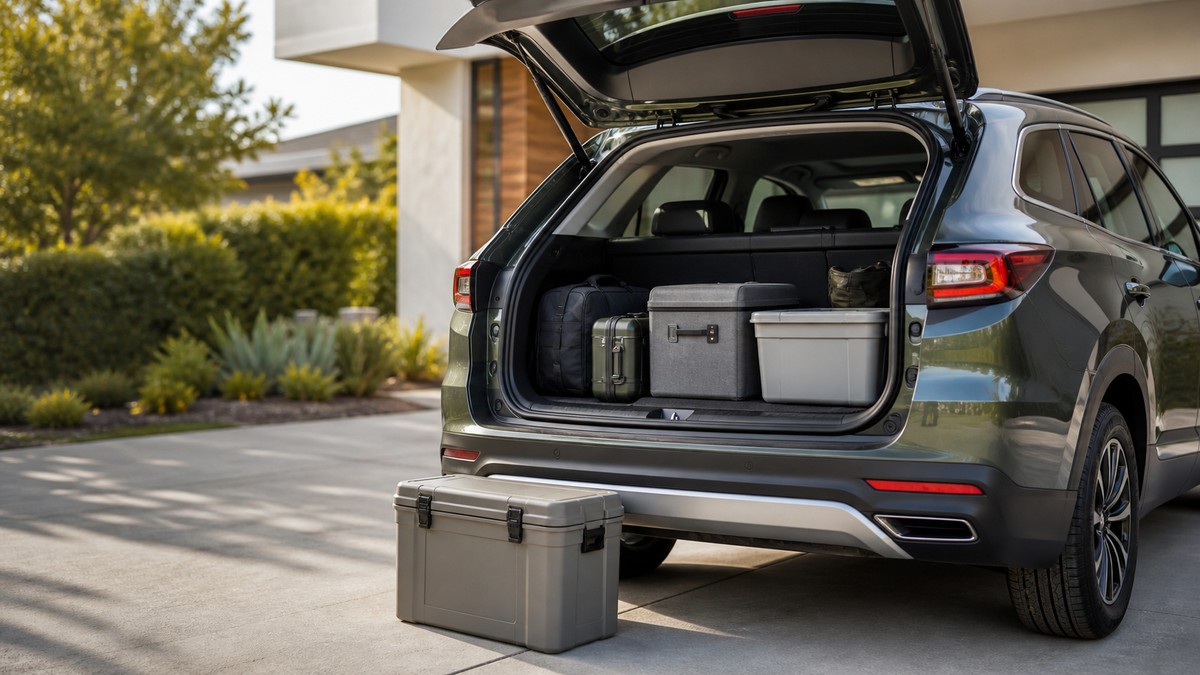
You read the spec sheet, saw a big cubic-foot figure, and pictured every suitcase, stroller, and grocery run sliding right in. Then the hatch opened and reality showed up. The number on paper and the space in front of you can tell two very different stories, and the gap between them trips up plenty of smart shoppers.
- Cubic-foot ratings measure total volume, not the shape or reach of the space you actually use.
- Seat position, floor height, and liftover height change how much you can load without a fight.
- A quick real-world test with your own gear beats trusting any single printed figure.
Where the Cubic-Foot Number Comes From
Most automakers report cargo volume using a standardized method known as SAE J1100. It defines how interior and cargo dimensions get measured so brands can publish figures on the same general footing. That sounds tidy, but the standard has known soft spots when it deals with open cargo areas. An enclosed cabin is easy to measure. A load bay with a sloped rear window, a tapering roof, and odd corners is not. Two vehicles can post similar totals while offering very different usable room, because the math counts empty pockets of air that no box or bag can ever occupy.
That is why the same rating can feel generous in one model and cramped in another. Volume treats a jagged, wedge-shaped space as if it were a clean rectangle. Your luggage does not fold to fit the leftover slivers near the glass.
Shape Beats Size More Often Than You Think
Consumer Reports got tired of taking spec sheets at face value, so its testers built a physical approach instead. They load actual boxes into each cargo bay to see how much real, packable space is there. This box-fit method rewards a flat floor and square walls and punishes intrusions that steal room. A vehicle with a smaller printed figure can swallow more useful cargo than a rival that looks bigger on paper, simply because its space is shaped like the things people carry.
Rooflines matter here too. A steeply raked rear window looks sharp in the driveway, but it slices off the upper cargo zone right where you would stack a second suitcase. Wheel-well humps push in from the sides and narrow the floor between them. A wide box that clears the opening might still stall on those bumps once it is halfway in.
The Small Stuff That Specs Never Mention
Liftover height is the quiet dealbreaker. That is how high you have to hoist a bag to clear the bumper and drop it inside. A tall load lip turns a heavy cooler or a bag of mulch into a back strain, and no cubic-foot rating warns you about it. Older shoppers, shorter drivers, and anyone loading kids and gear at the same time feel this every single trip.
The opening shape deserves a look too. A wide, square hatch lets you slide bulky items straight back. A pinched or curved opening forces you to angle and wiggle everything, which wastes the space just past the threshold. Then there are the little cubbies. Underfloor bins, side pockets, and seatback nets keep small items from rolling around, and they add real usefulness that never shows up in a headline number.
How to Test It Before You Buy
Bring your own props. A folded stroller, the suitcase you travel with, a couple of grocery bins, whatever you actually haul. Set them in the cargo bay and behind the second row. Fold the seats and check whether the floor goes flat or leaves a step you would have to lift over. Note how high you reach to load the heaviest item. Slide a wide box past the opening and watch for wheel-well pinch points.
Pay attention to seat position while you are at it. Sliding rear seats let you trade legroom for luggage room, so the same vehicle can post different cargo figures depending on where those seats sit. A rating measured with the seats pushed all the way forward flatters the number without helping your passengers.
Trust Your Own Tape Measure
Cargo figures are a starting point, not a verdict. Use them to build a short list, then let the real space earn your money. Load it, lift it, and fold the seats yourself. The SUV that fits your life is the one that swallows your gear without a wrestling match, and that answer lives in the driveway, not on the window sticker.
This post may contain affiliate links. Meaning a commission is given should you decide to make a purchase through these links, at no cost to you. All products shown are researched and tested to give an accurate review for you.