
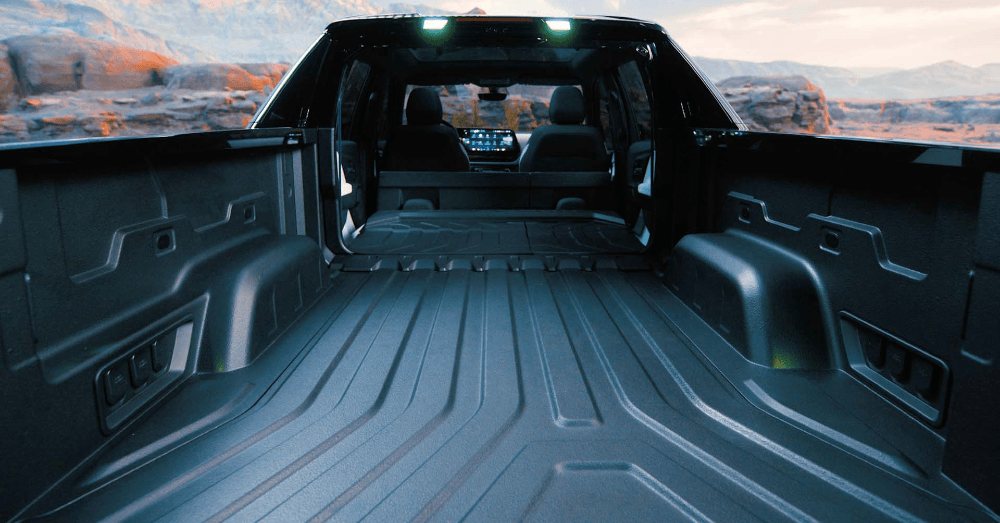
If you’ve watched the new wave of electric pickups roll out, you may have heard truck fans buzzing about a feature called the midgate. It isn’t new, exactly. The idea first showed up on the Chevrolet Avalanche more than two decades ago, faded into history, and has now resurfaced on a fresh generation of battery-powered trucks. And yes, it’s just as cool as it sounds.
- A midgate is a fold-down wall between the cab and bed that turns a short pickup into a long-bed hauler.
- It first appeared on the Chevy Avalanche, Cadillac Escalade EXT, and Hummer H2 SUT in the early 2000s.
- GM brought the idea back on the Silverado EV, stretching cargo space to nearly 11 feet.
So, What Exactly Is a Midgate?
A midgate is a removable or fold-down panel that sits behind the rear seats of a crew cab pickup. When you drop it, the bed and cabin combine into one continuous cargo area. Think of it like a convertible roof, only for hauling lumber, surfboards, or that yard-sale couch you couldn’t pass up.
First seen on the Chevrolet Avalanche, Cadillac Escalade EXT, and Hummer H2 SUT, the midgate opens up the back half of the cab to the bed, creating more than 9 feet of usable length between the folded rear seat and the tailgate. The original Avalanche debuted the concept in 2001, and it built a loyal cult following before GM retired the model in 2013.
Why Electric Trucks Brought It Back
Modern pickups have a problem. Crew cabs are popular because families want room for passengers, but big cabs eat into bed length. Most short beds top out around five and a half to six feet, which isn’t enough for full sheets of plywood, kayaks, or long pipes. The midgate solves that without forcing buyers into a longer wheelbase.
Chevy was the first to reintroduce the feature on a modern truck with the Silverado EV. The truck has a midgate similar to the one in the Avalanche, allowing the wall separating the bed from the cab to be lowered in a 60/40 split. That extends the effective bed length while leaving room for a rear passenger. So you can carry an eight-foot ladder and still bring along a friend in the back seat.
The numbers are impressive. The Silverado EV has a relatively short bed at 5 feet 11 inches, but that stretches to over 9 feet with the Multi-Flex Midgate. The truck offers a maximum towing capacity of 12,500 pounds and a payload capacity of 1,800 pounds. Drop the tailgate too, and you can fit boards reaching nearly 11 feet long.
How the Multi-Flex Midgate Actually Works
GM’s clever midgate isn’t just a single hinged panel. It’s a system with several configurations. The Silverado EV’s midgate splits 60/40 like rear seats if your cargo is narrow. You can also keep the rear window in place and fold only the lower portion, which lets you enjoy extra space while a tonneau cover keeps the elements out.
That flexibility matters. You don’t always want the entire cab open to the bed. Maybe you’re hauling skis and want to keep the cabin warm. Maybe you’ve got one passenger and one long item. The split design handles both. The rear seat bottoms flip forward in a 60/40 split, which makes it easy to reach under-seat storage, fold the seatback down, and clear the way to open the midgate.
According to one hands-on review, the midgate is a removable rear wall that connects the cabin to the truck bed, creating a contiguous space of nearly 9 feet, and best of all, it’s pretty simple to manage solo. The rear glass can also stow behind the seat if you want a fully open-air setup.
Which EV Trucks Have It?
Right now, the midgate remains a GM exclusive in the modern truck market. The Chevy Silverado EV offers a Multi-Flex Midgate with pass-through, a Chevy-exclusive feature that expands the load floor of the truck bed into the cabin so you can carry long, bulky, or odd-shaped items. The GMC Sierra EV, which shares the Ultium platform, is following suit.
The Ford F-150 Lightning, Tesla Cybertruck, and Rivian R1T all skipped the midgate. Rivian leans on a gear tunnel and powered tonneau, while Tesla and Ford stick with traditional bed layouts. That gives Chevy a real differentiator in a crowded EV truck space.
Why It Matters for Truck Buyers
Pickups are tools first, and the best tools adapt. The midgate proves that electric trucks aren’t simply gas trucks with batteries. The flat-floor architecture of EVs gave engineers room to rethink old layouts, and reviving a fan-favorite Avalanche feature was a smart call. For contractors hauling materials, weekend warriors with toys to move, and anyone who has ever wished their crew cab had a longer bed, the midgate finally gives buyers the cargo flexibility they’ve been asking for. It’s a piece of truck history with a fresh charge behind it, and it’s hard to imagine future electric pickups ignoring the idea for long.
